
What Is a Shuttle Run?
You most likely encountered the shuttle run back in elementary school. It is a technique used to test speed of movement combined with changes of direction. Dynamism and agility are particularly key. However, there is also an endurance version, which we'll take a look at too!
How Is a Shuttle Run Performed?
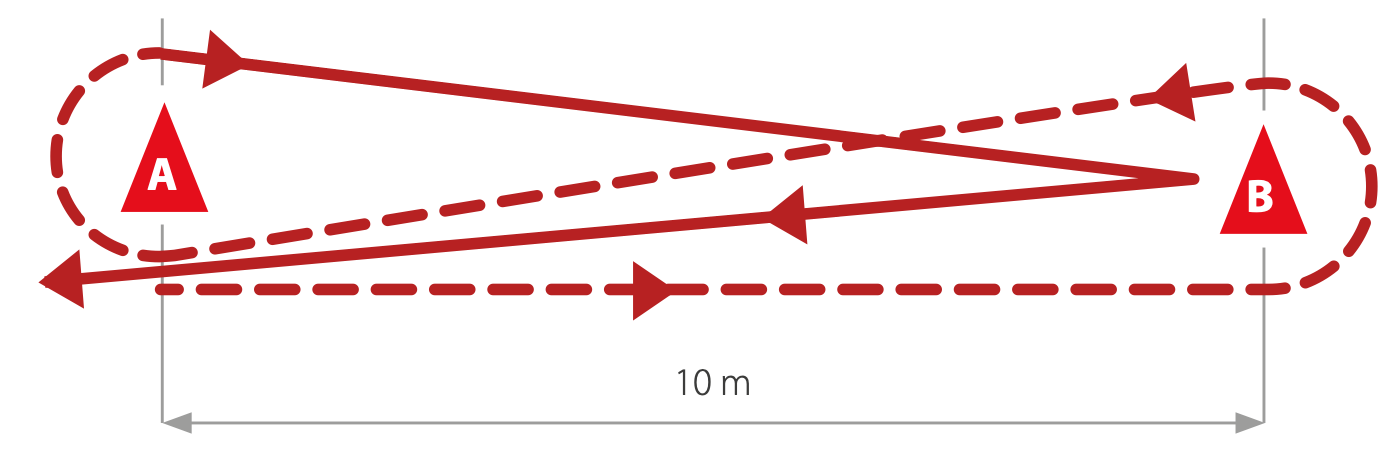
The shuttle run is run over a distance of 4x10 meters on a flat surface, ideally in a gym or on a flat section of a track. The individual sections are marked with cones – cone A and cone B. How is it performed?
On command, you sprint from cone A to cone B. You loop around cone B and head back diagonally to cone A (the first part of the shuttle run track forms a figure-eight pattern), where you must touch the cone. Then, you run straight from cone A to cone B. You touch cone B and run back to cone A, which you must also touch. Touching cone B finishes the test.
Before the official start, you first do a practice run through the course. You get a total of two attempts, with a rest period of at least 5 minutes between them. The better result is recorded.
What Is Considered an Invalid Attempt?
An invalid attempt occurs when:
- You step over the starting line
- You start before the signal
- You fail to follow the proper course
- You fail to touch the first or second cone
Top4Running TIP: Another running test that checks your physical fitness is the Cooper Test. Try it out and see where you stand!
Endurance Shuttle Run, or Beep Test
While a standard shuttle run is completed in a matter of seconds, there is also an endurance version commonly known as the "beep test." It is run on a 20-meter track, from line to line, and you must complete each shuttle within progressively shortening time intervals. How is it performed?
- You run from starting line A to line B, set 20 meters apart. You touch line B with one foot and turn back toward starting line A.
- The running pace is dictated by audio cues and beeps (hence "beep test").
- Crucially, with every beep, you must reach one of the end lines.
- You start at an easy pace, around 8.5 km/h, but run slightly faster with each passing minute. By the final 20th minute, you would have to run at speeds up to 18 km/h! For instance, the first 20-meter segment is run in 9 seconds, while the tenth segment is down to 5.5 seconds.
- Approximately every minute, you advance to a new level, and the time between beeps gets shorter.
- Your goal is to stay in as long as possible and complete as many 20-meter shuttles within the time limit as you can.
- You finish when you fail to reach the line twice in a row before the signal sounds.
Given the intensity of the test, very few people can last the full 20 minutes. Either way, the beep test is a fantastic tool for getting a clear picture of your aerobic capacity, or VO2 max. It's no wonder it is widely used in schools, the military, and sports organizations worldwide.
How to Train for the Endurance Shuttle Run?
As the name suggests, endurance is key for this type of test. But endurance is also the cornerstone for your other running goals, because speed, agility, and overall performance are built on an endurance foundation. Here are a few basic tips to help you build that endurance:
- Long runs – Include at least 3 long runs per week in your plan (over 60 minutes).
- Slow pace – Even if your legs itch to go faster, try to run easy and slow. Ideally, keep your heart rate around 70–75% of your maximum, which falls in the range of 110–160 bpm. If you don't use a sports watch or another tracking device, rely on your effort level and your ability to hold a conversation during the run.
- Focus on time, not distance – At this phase of preparation, it is far more important how many minutes you spend moving than the number of kilometers covered.
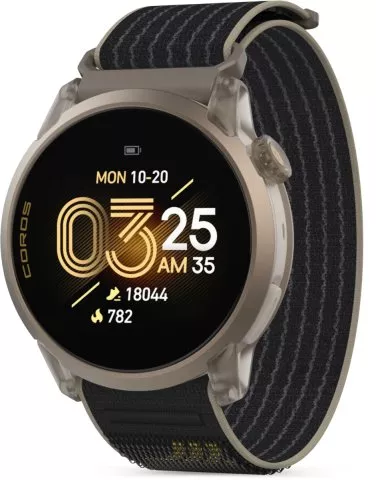

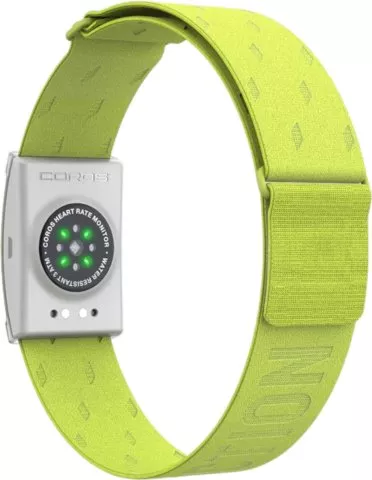
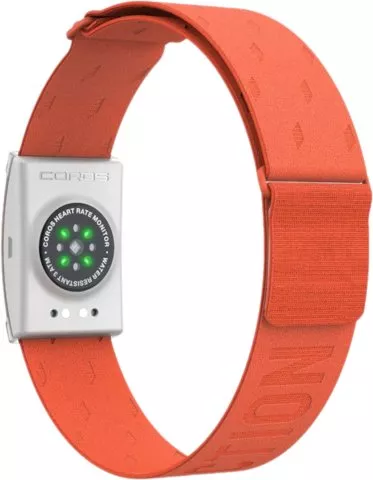




Once you complete this endurance phase, which takes about 2–3 months depending on your individual needs and goals, you can start focusing on speed workouts – sprints, intervals, hill repeats, fartlek, or tempo runs. In fact, preparing for the beep test is also great preparation for the classic 4x10 m shuttle run.
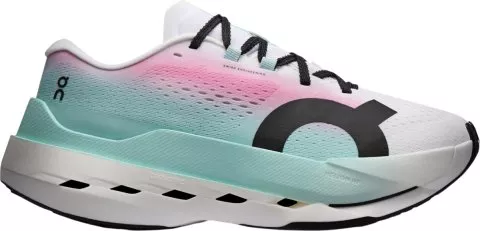
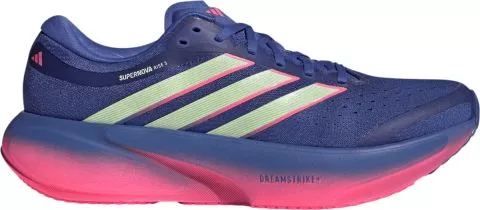
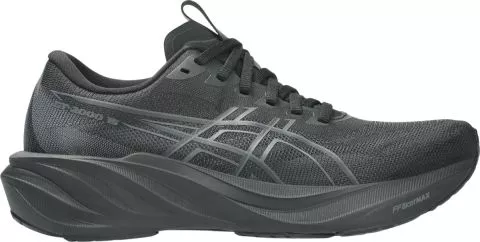
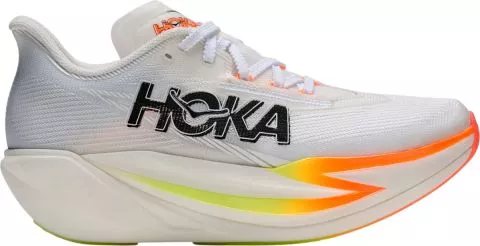
Gear up with quality road running shoes to support your performance!









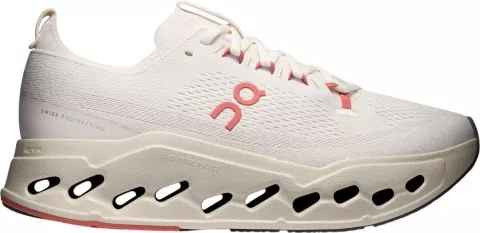
Men's road shoes Women's road shoes
Shuttle Run Scoring Charts and Standards
The 4x10 shuttle run is run in elementary and high schools during physical education class. You might also encounter it in fitness entrance tests for the Czech Police Force, or you can simply try it out of curiosity. What are the average times for children, how fast do you need to complete it for the police, and what does the general scoring chart look like? Check it out!
1) Average times for children:
| Age | Average time (seconds) | |
| Boys | Girls | |
10 | 11,3-14,1 | 11,8-14,7 |
| 12 | 11,0-13,7 | 11,1-13,8 |
| 14 | 10,6-13,3 | 10,8-13,6 |
| 17-18 | 11,4 | 12,3 |
2) Adult scoring chart
| Points | Men | Women | |||||
| 18-34 | 35-44 | 45-55 | 18-29 | 30-39 | 40-50 | ||
| 1 | 16,0 | 17,0 | 19,5 | F | 18,6 | 19,5 | 21,0 |
| 2 | 15,5 | 16,5 | 19,0 | A | 18,2 | 19,0 | 20,5 |
| 3 | 15,0 | 16,0 | 18,5 | I | 17,8 | 18,5 | 20,0 |
| 4 | 14,5 | 15,5 | 17,0 | 17,3 | 18,0 | 19,5 | |
| 5 | 14,0 | 15,0 | 16,5 | 16,8 | 17,6 | 19,0 | |
| 6 | 13,4 | 14,5 | 15,9 | 16,0 | 17,0 | 18,5 | |
| 7 | 12,8 | 14,0 | 15,3 | L | 15,2 | 16,4 | 18,0 |
| 8 | 12,3 | 13,5 | 14,5 | E | 14,5 | 15,8 | 17,5 |
| 9 | 11,9 | 13,1 | 14,0 | D | 14,0 | 15,2 | 17,0 |
| 10 | 11,6 | 12,7 | 13,5 | 13,5 | 14,7 | 16,5 | |
| 11 | 11,4 | 12,4 | 13,1 | 13,1 | 14,2 | 16,0 | |
| 12 | 11,2 | 12,1 | 12,7 | 12,7 | 13,7 | 15,5 | |
| 13 | 11,0 | 11,8 | 12,4 | 12,4 | 13,2 | 15,0 | |
| 14 | 10,8 | 11,5 | 12,1 | 12,0 | 12,7 | 14,5 | |
| 15 | 10,5 | 11,2 | 11,8 | 11,6 | 12,2 | 14,0 | |
| 16 | 10,3 | 11,0 | 11,5 | 11,3 | 11,8 | 13,5 | |
| 17 | 10,1 | 10,7 | 11,3 | 11,0 | 11,5 | 13,1 | |
| 18 | 9,8 | 10,5 | 11,0 | 10,8 | 11,3 | 12,7 | |
Beep Test Scoring Chart and Standards
The beep test, or endurance shuttle run, is used by organizations such as the British, Canadian, and Australian armed forces, as well as police forces in these and many other countries. In Finland, it is even mandatory in school PE classes, though grading it is prohibited.
| Level | Rounds | Culumative rounts | Speed (km/h) | Interval time (s) | Level time (s) | Level lenght (m) | Cumulative lenth (m) | Cumulative time (mm:ss) |
| 1 | 7 | 7 | 8,5 | 8,47 | 59,3 | 140 | 140 m | 00:59 |
| 2 | 8 | 15 | 9,0 | 8,00 | 64,0 | 160 | 300 m | 02:03 |
| 3 | 8 | 23 | 9,5 | 7,58 | 60,6 | 160 | 460 m | 03:04 |
| 4 | 8 | 31 | 10,0 | 7,20 | 57,6 | 160 | 620 m | 04:02 |
| 5 | 9 | 40 | 10,5 | 6,86 | 61,7 | 180 | 800 m | 05:03 |
| 6 | 9 | 49 | 11,0 | 6,55 | 58,9 | 180 | 980 m | 06:02 |
| 7 | 10 | 59 | 11,5 | 6,26 | 62,6 | 200 | 1 180 m | 07:05 |
| 8 | 10 | 69 | 12,0 | 6,00 | 60,0 | 200 | 1 380 m | 08:05 |
| 9 | 10 | 79 | 12,5 | 5,76 | 57,6 | 200 | 1 580 m | 09:02 |
| 10 | 11 | 90 | 13,0 | 5,54 | 60,9 | 220 | 1 800 m | 10:03 |
| 11 | 11 | 101 | 13,5 | 5,33 | 58,7 | 220 | 2 020 m | 11:02 |
| 12 | 12 | 113 | 14,0 | 5,14 | 61,7 | 240 | 2 260 m | 12:04 |
| 13 | 12 | 125 | 14,5 | 4,97 | 59,6 | 240 | 2 500 m | 13:03 |
| 14 | 13 | 138 | 15,0 | 4,80 | 62,4 | 260 | 2 760 m | 14:06 |
| 15 | 13 | 151 | 15,5 | 4,65 | 60,4 | 260 | 3 020 m | 15:06 |
| 16 | 13 | 164 | 16,0 | 4,50 | 58,5 | 260 | 3 280 m | 16:05 |
| 17 | 14 | 178 | 16,5 | 4,36 | 61,1 | 280 | 3 560 m | 17:06 |
| 18 | 14 | 192 | 17,0 | 4,24 | 59,3 | 280 | 3 840 m | 18:05 |
| 19 | 15 | 207 | 17,5 | 4,11 | 61,7 | 300 | 4 140 m | 19:07 |
| 20 | 15 | 222 | 18,0 | 4,00 | 60,0 | 300 | 4 440 m | 20:07 |
| 21 | 15 | 237 | 18,5 | 3,89 | 58,4 | 300 | 4 740 m | 21:05 |
Now that you know the charts, it's your turn – do you dare to test your agility or endurance with a shuttle run? Lace up your running shoes and show what you've got!




 EUR - European Union (English)
 EUR - Top4Running.at (Deutsch)
 EUR - Top4Running.be (In Dutch)
 EUR - Top4Running.bg (BG)
 EUR - Top4Running.hr (Hrvatski)
 EUR - Top4Running.cy (EL)
 CZK - Top4Running.cz (Česky)
 DKK - Top4Running.dk (Dansk)
 EUR - Top4Running.fi (Suo̯mi)
 EUR - Top4Running.fr (Français)
 EUR - Top4Running.de (Deutsch)
 EUR - Top4Running.gr (EL)
 HUF - Top4Running.hu (Magyar)
 EUR - Top4Running.ie (English)
 EUR - Top4Running.it (Italiano)
 EUR - Top4Running.nl (Dutch)
 PLN - Top4Running.pl (Polski)
 EUR - Top4Running.pt (Português)
 RON - Top4Running.ro (Româna)
 EUR - Top4Running.sk (Slovensky)
 EUR - Top4Running.si (Slovenski)
 EUR - Top4Running.es (Español)
 SEK - Top4Running.se (Svenska)
 CHF - Top4Running.ch (German)
 +49 79 519 549 600
 info@top4running.com